One-day International cricket has gone through changes over the years, but one of the aspects of the game that has continued to be crucial is the importance of taking wickets in the middle overs.
In the span of the last three years, which included Pakistan’s dismal 2023 World Cup campaign in India, the national side’s bowlers have struggled to strike as often as they would have liked in the middle overs.
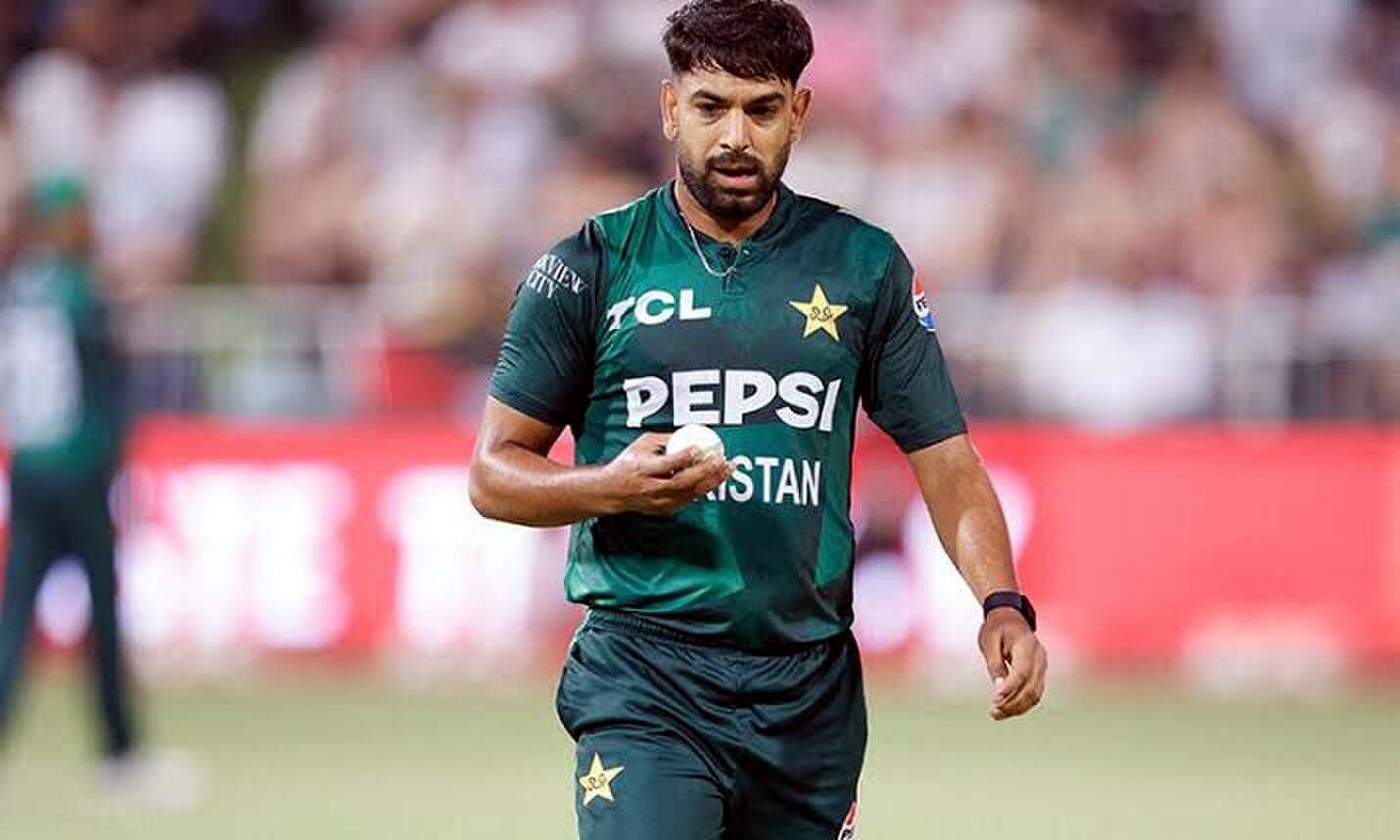
Haris Rauf, who has featured for Pakistan in most of the matches through this period, is well aware of the team’s shortcomings as they look forward to the next edition of the World Cup, set to be co-hosted by South Africa, Namibia and Zimbabwe in 2027.
Pakistan’s bowlers have averaged 4.11 dismissals between overs 11 and 40 in ODIs since the start of 2023. The figures underline the challenge facing a side that has often depended on early breakthroughs and late-innings bowling to contain opponents.
Speaking to reporters at Gaddafi Stadium on Friday, ahead of Sunday’s tri-series match against England, Haris acknowledged the importance of striking in the middle overs, warning that allowing batters to settle could leave the bowling side struggling to recover.
“If you do not take wickets in the middle overs, you will struggle as a team,” the fast bowler said. “If their middle-order batters or openers remain at the crease until the end, they can hurt you.”
Pakistan have made a promising start to the ongoing tri-series, beating Sri Lanka by 37 runs and England by 87 in their first two matches.
But the contest between England and Sri Lanka in Rawalpindi on Thursday, when the latter chased down a target of 430 after England posted 429-4, offered a reminder of how little room for error bowlers have on batting-friendly surfaces.
Haris believes the modern game demands more from both departments, with teams needing to prepare for totals well beyond 300.
“Nowadays, we may have to score 350-plus runs ourselves at the World Cup and chase totals of 350-plus as well,” he said. “The support for bowlers is a little less, but you have to keep working on your own skills and make the most of situations when conditions favour you.”
One potential source of assistance is reverse swing, particularly with the revised ODI playing conditions introduced in July last year.
Under the change, two new balls are used until the end of the 34th over, after which the fielding side chooses one ball to be used at both ends for overs 35 to 50.
Previously, a separate ball was used from each end throughout the innings, limiting the extent to which either could age.
Haris said the older ball could offer an advantage during daytime matches, when conditions were more conducive to reverse swing, but added that dew could reduce its effectiveness in night games.
The opportunity, however, is not enough on its own. Pakistan must translate any assistance into wickets, particularly during the middle overs, when established batters can accelerate and put the bowling attack under pressure.
Haris’ own recent domestic performances suggest that he has been working towards greater consistency and endurance.
The 32-year-old represented Pakistan Television in four matches of the ongoing President’s Trophy Grade-I competition, taking 18 wickets, averaging 20.11, including two four-wicket hauls and a best return of 5-34.
For a bowler whose rise was built largely on raw pace, domestic cricket has provided an opportunity to sharpen his control and build the capacity to bowl longer spells.
Haris, who emerged from Pakistan’s tape-ball circuit before earning recognition through Lahore Qalandars’ development programme, made his international debut in 2020.
“Domestic cricket is just as important as international cricket,” he said. “You go there and work on your mistakes. I tried to bowl longer spells, and having played four-day cricket, I feel that one-day cricket is not as difficult for me now. Your control over line and length improves.”
The stint has also prompted Haris to reiterate his willingness to return to Test cricket, a format that became the centre of a dispute between him and the then chief selector Wahab Riaz in late 2023.
Haris withdrew from Pakistan’s tour of Australia after initially being considered for selection, citing concerns over workload and fitness. Wahab said the team had planned to use him as an impact bowler in short spells and maintained that the management had received assurances about his availability. The disagreement escalated in February 2024, when the PCB terminated Haris’ central contract, citing his refusal to tour.
Haris said he had not been ready for the demands of Test cricket at the time but was now working towards making himself available if Pakistan needed him.
“I am looking at myself for that role as well. If the team needs a fast bowler or someone who can provide pace, why should I not make myself available?” he said. “If I get the opportunity to play red-ball cricket for Pakistan, I will certainly take it.”
For now, his immediate task remains helping Pakistan sustain their early momentum in the tri-series – in two matches of which he has bagged four wickets at 20 – while addressing a weakness that has persisted across formats and campaigns.
Haris insisted that criticism over runs conceded would not deter him, arguing that the demands of modern cricket meant even the best bowlers could have difficult days.
“Pace is very important. I work on my fitness and try to maintain it during the off-season,” he said. “I have managed to maintain my pace, and I will continue trying to do so.”
With the 2027 World Cup approaching, Pakistan’s challenge will be to ensure that pace, reverse swing and improved preparation translate into the breakthroughs that matter most.
For Haris, that begins with taking wickets when the opposition is building an innings, rather than waiting for the death overs to turn the contest.