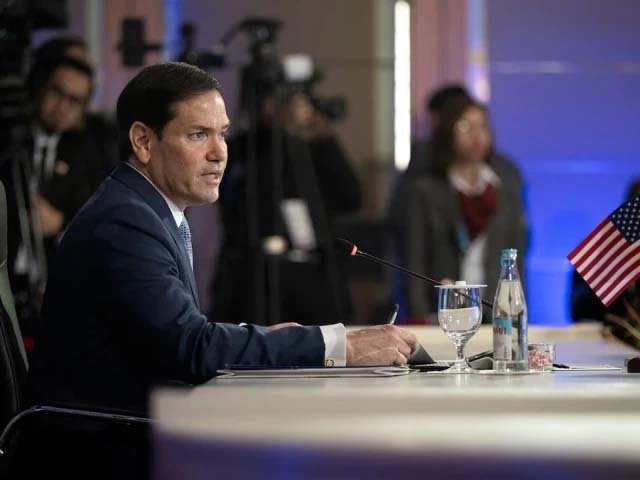
Secretary of State Marco Rubio said on Tuesday the US is open to speaking with Iranians at the UN General Assembly, but no meeting is currently scheduled.
“We’re open to that. I don’t think anything is scheduled at this point, but we’re certainly open to something like that, especially if it has the prospects of leading to something positive and ultimately achieving the goal of what this is all about,” Rubio said in an interview with NBC’s “Today” show.
“And that is the fact that Iran can never have a nuclear weapon. They just simply can’t.”
Earlier, the Iranian Director General of Public Relations for the President’s Office issued a statement saying that the US’ denial of visas to Iran’s media team was “a blatant violation of media protection and an open admission of fear from the truth,” according to ISNA.
“If you claim to uphold freedom, where does this terror come from—of cameras and documents that have recorded the oppression of our nation and the bombing of schools”, they added.
Iran offers to reopen Hormuz within 7 days if US takes initial steps to ease military pressure: report
An unnamed Iranian official on Tuesday told Japan’s Kyodo News that Tehran has offered to “reopen the Strait of Hormuz within seven days if the United States takes initial steps toward easing military pressure.”
Anadolu could not independently confirm the veracity of the statement.
The proposal has “already been conveyed to Washington through mediators,” the report said.
It “calls for renewed talks aimed at reaching a permanent end to hostilities between the two countries,” the Iranian official said.
He ruled out a meeting between Iranian President Masoud Pezeshkian and his US counterpart Donald Trump on the sidelines of the 81st session of the UN General Assembly in New York this week.
“There is a possibility of moving toward an agreement,” the Iranian official said.
Washington must demonstrate “seriousness and commitment” if diplomacy is to advance, he added.
Saudi strikes kill 11: Houthi sources
Yemen’s Houthis said that strikes carried out by Saudi Arabia in the northwest of the country killed two civilians, AFP reported.
“A mother and child were killed, while her husband and two of her other children were wounded in strikes carried out by the Saudi enemy in the Al-Batin area of Al-Hazm, in Al-Jawf province,” the group’s news agency said, citing the Houthi health ministry.
Separately, an attack by Saudi Arabia on a prison in northwestern Yemen killed nine detainees, a Houthi official told the Saba news agency, according to AFP.
Nine prisoners captured during recent events were killed last night when the Saudi enemy targeted a prison in Al-Hazm, in Al-Jawf governorate, said Houthi official Abdelkader al-Murtada.
International flights proceeding as usual: Iranian civil aviation spokesperson
Iran’s national airline said on Tuesday that it has not received any ban on serving neighbouring countries, a day before US sanctions are due to be tightened against the Iranian aviation sector, AFP reported.
“Iran Air has not received any notification or official instruction from the civil aviation authorities of Turkiye, the Republic of Azerbaijan, or Iraq regarding a halt or suspension of the airline’s flights to Istanbul, Baku and Najaf,” the carrier says in a statement carried by state news agency ISNA.
Yesterday, United States Treasury Secretary Scott Bessent said that operations of all Iranian commercial airlines would shut down globally beginning on September 23.
“On September 23rd, all the Iranian airlines will be shut down around the world,” Bessent told CNBC, outlining broad secondary sanctions aimed at isolating Tehran’s civil aviation network.
Bessent explained that international hubs servicing Iranian planes would face complete exclusion from the American banking system. Foreign operators could not refuel the aircraft, provide landing facilities, or sell passenger tickets without risking their access to dollar clearing, he warned.
UNGA should restore global trust and end wars: Pezeshkian
Iranian President Masoud Pezeshkian showed hope that a UN General Assembly meeting convened under the banner of trust could restore confidence worldwide and work toward ending war and bloodshed, according to IRNA.
Speaking to reporters before departing for New York, Pezeshkian hoped that the world’s people would come to recognise the oppressive actions unfolding across the region.
“We will express the oppression of the Iranian children in Minab and Lamerd and the brutality of the perpetrators of these crimes,” he added.
Human beings do not commit such acts, and these behaviours are a source of regret, he said.
Saudi Arabia restarts East-West oil pipeline, to resume exports from Yanbu, sources say
Saudi Arabia has restarted operations at its East-West Pipeline and could resume exports from the Red Sea port of Yanbu later on Tuesday, three sources briefed on the matter said.
The pipeline was pumping at a low rate, two of them said.
State energy firm Saudi Aramco did not immediately respond to a request for comment.
Drone attacks forced Saudi Arabia to shut its East-West Pipeline on September 13, halting crude loadings at the kingdom’s Yanbu port.
Negotiations a separate battlefield; enemy lacks capacity for new conflict: IRGC spokesperson
The spokesperson for the Islamic Revolution Guards Corps (IRGC) said Iran was fully prepared for war but could also pursue negotiations if national interests required it, saying that talks can constitute “another battlefield.”
“Negotiation does not mean compromise; negotiation is another scene of war,” Second Brigadier General Hossein Mohebbisaid said in an interview with IRNA on Tuesday, adding that negotiations involve “war with words, arguments and diplomatic methods.”
He said the IRGC has prepared itself for a prolonged war and that Iran’s Armed Forces are fully ready for war.
“What is correct in this matter is that we should have 100-percent readiness for war, and we have this capability and readiness. [Iranian] Armed Forces are now 100 percent ready to fight, and the IRGC has prepared itself for a long war. But this does not mean rejecting negotiations.”
Mohebbi said that decisions on war and negotiations were not made solely by the IRGC, clarifying that such decisions were made within the framework of Iran’s political system and under the command of the Leader of the Islamic Revolution and Commander-in-Chief of the Armed Forces.
The spokesperson said Iran’s approach should be determined by national interests.
“We must see when and through what action our national interests are served. If our national interests require us to fight, we must fight. If our national interests require us to negotiate alongside the war, we must negotiate,” he said.
He maintained that Iran should have both military preparedness and the ability to use diplomacy, describing them as complementary instruments in pursuing national interests.
Separately, Iranian Navy commander Rear Admiral Shahram Irani said that any aggression against national interests would trigger a “firm, decisive and appropriate response,” according to Press TV.
We will forcefully raise Iran’s positions in international forums: Pezeshkian
Iranian President Masoud Pezeshkian left for New York on Tuesday morning to attend the 81st session of the United Nations General Assembly, saying that the Iranian delegation will “forcefully raise Iran’s positions in international forums”, according to ISNA.
“The issues we will raise at the United Nations are expressing the oppressed state of the Iranian nation, the crimes that have occurred, and the distrust that has been created,” he is reported to have said.
He added that Iran “went to the negotiating table several times and signed agreements”, but the agreements were not adhered to and were “trampled underfoot.”
Separately, Iranian Foreign Minister Abbas Araghchi said that they will “express Iran’s legitimate positions from the UN podium,” referring to the “oppression of the Iranian people, the martyrs of Iran, the martyrs of the Minab school, and at their forefront, our martyred leader and commander.”
According to Al Jazeera, Pezeshkian added that “people cannot be forced into submission by force.”
‘Public’s memory’ will not forget who initiated ‘war of aggression’: Iranian FM spokesperson
Iranian Foreign Ministry Spokesperson Esmaeil Baghaei said on Tuesday that the US was attempting to shift blame onto Iran for rising fuel prices, adding that the public would not forget “who actually initiated the war of aggression, and whose actions created the crisis that led to the closure of the Strait of Hormuz.”
He likened the US’ shifting of blame to how “Hitler similarly framed his invasion of Poland as a defensive action.”
Read: All Iranian airlines to shut down worldwide by Sept 23, US Treasury chief says
“When the instigator of an unlawful ‘war of choice’ blames the victim for the fallout, should this be viewed as ‘strategic brilliance’, or is it simply a textbook symptom of ‘The March of Folly’?!”
Trust in UN has been lost: Araghchi
Iranian Foreign Minister Abbas Araghchi said trust in the United Nations has been lost, according to Al Jazeera, which cited his Telegram channel.
He made the remarks upon his arrival in New York before the UN General Assembly (UNGA) meeting.
“This visit takes place following the cowardly war waged against us by the US and the Zionist regime, the subsequent developments, and in reality, amidst a situation that effectively remains a state of war,” he said.
“Naturally, our primary objective is to utilise a major international platform to defend the legitimacy, rights, and interests of the Iranian people.”
Araghchi stated that the UN had lost credibility and trust due to its failure to uphold world peace and security, and pointed out that the UNGA is set to open on Tuesday under the theme “restoring trust”.
“This reflects a universal acknowledgement that trust in the organisation has eroded, or vanished entirely, due to its failure to effectively maintain international peace and security,” Araghchi said.
“Certain nations arrogate to themselves the right to act with impunity, disregarding international institutions, international law, and even the collective conscience of humanity; they claim immunity for themselves and their allies.”
“Consequently, we see a criminal entity like the Zionist regime given free rein to commit whatever acts it chooses, while Western and European nations, which style themselves as champions of human rights and humanitarian law, remain silent.”
Primary objective to advocate for ‘legitimacy, rights, and interests’ of Iran’s people: Araghchi
Araghchi said in comments carried by IRNA that the primary objective in taking part in the summit in New York was to “advocate for the legitimacy, rights, and interests of the Iranian people.”
Earlier, Baghaei released a statement on X regarding Araghchi’s visit, saying that “In addition to participating in the various agenda items of the United Nations General Assembly [UNGA]… Foreign Minister will hold talks and consultations with a large number of officials and foreign ministers attending the summit.”
Iranian Foreign Minister Abbas Araghchi arrived in New York on Monday to participate in the 81st session of the UNGA.
The top diplomat, who is leading a high-level delegation, was received at John F. Kennedy International Airport by Gholamhossein Darzi, Iran’s permanent representative and charge d’affaires to the United Nations, according to Iran’s state-owned news agency IRNA.
On his way to New York, Araghchi made a brief stop in Doha, where he held discussions with Qatari officials about the latest developments in the region.
Read more: Naqvi assures Iranian president of Pakistan’s determination to expand multisector cooperation
During the summit, he is expected to meet and consult with several world leaders and officials on the sidelines.
China says it opposes ‘illegal’ US sanctions on Iranian airlines
China said on Tuesday it opposed “illegal” US sanctions on Iranian airlines, a day after Treasury Secretary Scott Bessent threatened potential measures in a televised interview.
Bessent told CNBC on Monday that “all the Iranian airlines will be shut down around the world” in a matter of days under the weight of American sanctions, as the Trump administration seeks to ramp up pressure on Tehran.
Beijing, a top economic partner and diplomatic backer of Iran, slammed the threats on Tuesday, calling such measures “illegal”.
“China consistently opposes illegal unilateral sanctions that lack a basis in international law or authorisation from the UN Security Council,” foreign ministry spokesman Guo Jiakun told a news conference, according to AFP.
Saudi Arabia sends all-clear after alert issued for southern province
Saudi Arabia’s Civil Defence sent an all-clear on Tuesday after issuing an alert for potential danger in the southern Najran province.
Civil Defence said the danger had passed in Najran, without specifying the nature of the threat.
The agency earlier issued an emergency alert for potential danger in Najran through the National Early Warning Platform.
On Saturday, the Civil Defence issued alerts for potential danger in the capital Riyadh, Al-Kharj and Farasan provinces in the country’s south. It came amid escalating tensions with the Houthi group in Yemen, which has announced what it called a “maritime blockade” on Saudi shipping in the Red Sea and launched missile and drone attacks on Saudi territory.
Macron, Trump hold talks on Ukraine, Red Sea, Hormuz
French President Emmanuel Macron said Monday that he and US President Donald Trump discussed diplomatic efforts to reopen the Strait of Hormuz, increase shipping through the waterway and ease tensions in the Middle East.
Speaking after their meeting in New York, Macron said the two leaders also discussed securing oil routes in the Red Sea without escalating tensions, as well as support for Ukraine and efforts to address energy-related issues in the Russia-Ukraine conflict.
There is a shared desire to “do everything to open (…) Hormuz” and “free up volumes,” he said.
They also discussed the need to help Ukrainians “even faster and stronger” in terms of interceptors for defence.
The two leaders also revisited “the initiatives that could be taken to find a moratorium on energy issues.”
Macron said he was scheduled to meet with Ukrainian President Volodymyr Zelenskyy and that further exchanges were planned for Tuesday with the American and Ukrainian sides.
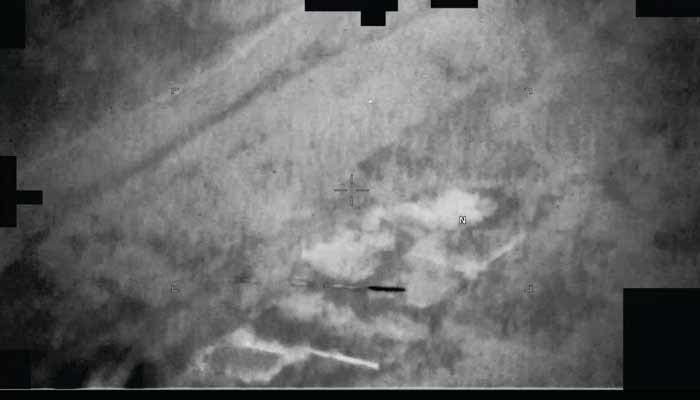
Iran weapon test on US aircraft carrier ‘went well’: IRGC spokesperson
An IRGC spokesperson said that the test of a “new Iranian weapon” on a US aircraft carrier “went well”, according to ISNA.
“If a new aggression occurs, besides this weapon, we will bring other weapons into the field as well,” he said in the interview.
Latest Yemen clashes kill more than 150: Military sources to AFP
Fighting in Yemen between the Iran-backed Houthis and government forces supported by Saudi Arabia has killed 154 people in the past two days, military sources from both sides told AFP on Tuesday.
“The death toll from Saudi airstrikes, clashes and artillery fire in the governorates of Taiz, Al-Jawf, Marib and Saada stands at 118,” Houthi military sources said, while government sources reported 36 killed in their ranks.
Saudi airstrikes on port city of Mokha kill 6, says Houthi-affiliated news agency
Saudi airstrikes on the strategic Red Sea port city of Mokha killed at least six people and injured eight others, according to a report on Tuesday by the Houthi-affiliated Saba news agency.
“Six civilians, including two children and a woman, were killed and eight others, including a child and a woman, were injured in Saudi-led airstrikes on Mokha,” Saba said.
The Houthis are fighting Yemen’s internationally recognised government in a civil war, with Saudi Arabia backing the government.
In recent days, the Houthis have claimed responsibility for drone and ballistic missile attacks targeting the Saudi capital Riyadh as well as energy facilities along the country’s Red Sea coast.
G7 foreign ministers call on Iran to stop arming Houthis
G7 foreign ministers called on Iran on Tuesday “to end its arming of and support for the Houthis,” warning that the escalating attacks threaten international trade and global stability, according to Al Jazeera.
They also called on the Houthis to “immediately cease all military actions, all threats and attacks against civilian shipping, and to return to the political process in good faith,” the leaders representing Canada, France, Germany, Italy, Japan, the United Kingdom and the United States said in a statement.
They alleged that Tehran was in violation of past UN Security Council resolutions.
US eyes $5B fund to rebuild Gulf energy sites hit in war against Iran
The US has floated committing $5 billion to a new multinational fund aimed at repairing Gulf energy facilities hit during the war with Iran and helping regional states find export routes that bypass the Strait of Hormuz, according to a media report on Monday.
The Wall Street Journal, citing US and Middle Eastern officials and documents it reviewed, said Washington is seeking a matching $5 billion contribution from eight Middle Eastern partners — Saudi Arabia, the United Arab Emirates, Qatar, Bahrain, Kuwait, Oman, Iraq and Jordan — which would bring the total to $10 billion.
The initiative is called the Partnership for Allied Trust and Construction (Pact).
The US Development Finance Corporation would run the fund, according to the report. The agency’s past work has mostly centred on developing countries rather than rich Gulf monarchies.
US officials stressed that discussions are still underway, the terms may change, and it remains uncertain whether any country will sign on.
Some regional officials viewed the plan as an effort to portray the Strait of Hormuz as less critical and show a united front against Tehran, the Journal said. They also argued that funding reconstruction before a peace deal would be premature because Iran could target new facilities.
“This strategy has risk written all over it,” said Bilal Saab of the consulting firm TRENDS US.
Since the seven-month war began, Iranian missiles and drones have struck dozens of refineries, oil fields and gas export terminals, according to the report. A drone attack earlier this month also knocked out Saudi Arabia’s bypass pipeline, sending more crude through the Hormuz Strait and pushing tanker rates to record highs.
Umer Karim, a Gulf security researcher at the University of Birmingham, warned that the scheme could make some participants dependent on others and strain bilateral relations.
Repair costs are estimated at tens of billions of dollars, The Wall Street Journal added.
France working on UN Security Council resolution on Hormuz: diplomatic source
France is working on a new UN Security Council resolution to unblock the Strait of Hormuz, a diplomatic source told reporters, AFP reported.
“France wants to work with the Americans and its partners on a Security Council resolution guaranteeing freedom of navigation in the Strait of Hormuz,” the source said.
In April, Russia and China vetoed a draft resolution — spearheaded by Bahrain and backed by Gulf states and the United States — that also called for the Strait of Hormuz to be unblocked.
France seeks India’s role on Hormuz Strait, welcomes Pakistan’s Iran-US mediation
France sought to work with India to ensure freedom of navigation in the Strait of Hormuz and welcomed Pakistan’s mediation efforts between Iran and the US, according to the French Foreign Ministry on Monday.
Foreign Minister Jean-Noel Barrot met separately with his Indian and Pakistani counterparts on the sidelines of the UN General Assembly in New York.
Also read: PM Shehbaz arrives in New York to attend 81st UNGA session amid Middle East crisis
During his meeting with Indian External Affairs Minister Subrahmanyam Jaishankar, the two ministers “underscored the imperative of ensuring freedom of navigation” in the Strait of Hormuz and the Bab el-Mandeb Strait.
Barrot proposed that India work jointly with France on the issue, which is “crucial to the stability and prosperity of Europe and Asia.”
He also recalled the Franco-British initiative launched to ensure freedom of navigation in the Strait of Hormuz.
Barrot and Jaishankar reiterated France and India’s commitment to international law and their joint support for “effective and reformed multilateralism.”
They also recalled their intention to reform the UN Security Council.
The two ministers reaffirmed their support for a ceasefire in Ukraine and for “a comprehensive, just and lasting peace in accordance with international law.”
They also welcomed progress in the “comprehensive and special Franco-Indian strategic partnership,” particularly in defence, new technologies and higher education.
Barrot separately met Pakistani Deputy Prime Minister and Foreign Minister Ishaq Dar, with whom he discussed regional developments.
Also read: FM Dar stresses importance of GSP+ status in meeting with EU foreign policy chief
Barrot welcomed Pakistan’s mediation efforts between Iran and the US and stressed the need for “the most inclusive negotiations possible” to help secure energy supplies in particular and “sustainably address the threats posed by Iran in the nuclear, ballistic and regional spheres.”
The two ministers agreed to continue developing bilateral relations, particularly in university cooperation, cultural cooperation and sustainable development.
EU’s Kallas says Red Sea mission needs more than 10 warships
The European Union’s naval mission to protect shipping in the Red Sea would need to boost its numbers to more than 10 warships, its foreign policy chief said on Monday, adding that for now there were not that many in the area.
The EU’s Aspides mission was launched in 2024 to protect shipping from attacks by Yemen’s Iran-aligned Houthis, and diplomats have said there are currently six warships operating.
“When Aspides was put in place, then the indication was that it needs at least 10 ships. The situation, I think, is even more grave right now,” Kaja Kallas told reporters on the sidelines of the annual gathering of world leaders at the United Nations.
The Houthis have made rapid advances in recent weeks along the Red Sea coast, further complicating routes in a region that also includes the Strait of Hormuz, where traffic had already dwindled because of the US-Iran war.
Italy, one of the key countries in the Aspides mission, announced on Thursday it was preparing a naval mission in the area for its own ships, saying it could not wait for the EU to respond to the new crisis.
Kallas said the Houthi attacks were affecting European interests and impacting the global economy.
“The EU operation Aspides is making a crucial contribution to security in the region and global shipping, but the operation needs more naval assets and more air assets to address the increased level of threats in the region,” she said.
Kallas sent a letter to the EU’s 27 member states on September 19 asking them to up their contributions. The issue would be discussed at upcoming defence and foreign ministers’ meetings, she said in the letter.
“This situation, which is still evolving as we speak, is already affecting European interests with repercussions on our supply chains and could have implications for our ability to support our economies which were already hit by rising fuel prices,” she said in the letter.
“For the moment, although the Houthis communicate that they would only target Saudi-linked interests, there is uncertainty over their course of action with respect to vessels that transit through the Strait. Regardless, they are now in a better position to potentially harm maritime shipping.”
UK’s Burnham agrees to Saudi request for refuelling support
British Prime Minister Andy Burnham said on Monday he had agreed to a request from Saudi Arabia to provide defensive air-to-air refuelling for a limited time period, a move he described as helping to stabilise the wider region.
Riyadh requested support after the Houthis, who control the most populous parts of Yemen, intensified their attacks on Saudi Arabia, a new front in the wider war that began with US and Israeli strikes on Iran in late February.
“We have received a request from the Kingdom of Saudi Arabia for military support, and on the advice of the defence secretary and the foreign secretary, last night I agreed to that request for defensive air-to-air refuelling,” he told reporters as he travelled to New York for a meeting of the United Nations General Assembly.
“Because, of course, Saudi Arabia has been experiencing attacks… and we need to keep those pathways open, and hence our agreement to the request,” he said.
Britain and Saudi Arabia have been close military allies for decades, with Britain serving as one of the kingdom’s largest arms suppliers.
Earlier this year, Britain deployed its Sky Sabre air defence system to Saudi Arabia to help protect it from Iranian missile attacks during the US-Israeli conflict with Iran.
For the new air-to-air refuelling support, Britain will deploy one Voyager plane in the coming days.
“That is a time-limited agreement in terms of the assistance that we will provide, but we will keep it under review,” he said, adding that Britain was “playing our part” in the Middle East also by supporting efforts to keep the Strait of Hormuz open.