By: Murtaza Tareen
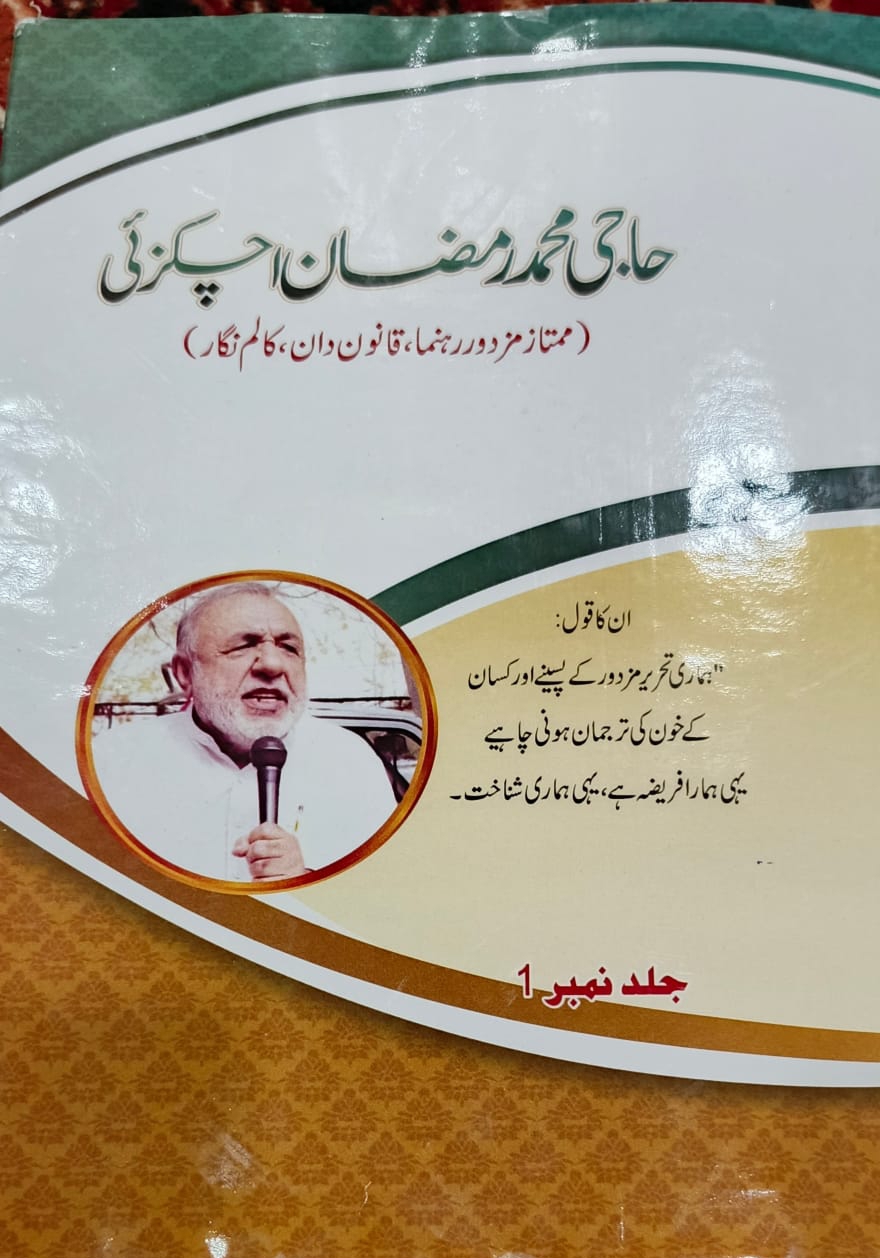
In a world where the voices of the working class are often drowned out by the clamor of power and privilege, the publication of Haji Muhammad Ramzan Achakzai’s compiled columns into a book stands as a powerful testament to the enduring fight for justice, equity, and dignity. This monumental work, recently released in Quetta, is more than a collection of articles—it is a clarion call to action, a historical archive, and a roadmap for the labor movement in Pakistan.
Haji Ramzan Achakzai, a towering figure in Pakistan’s labor landscape, has long been revered as a labor leader, social activist, and intellectual whose pen has been as mighty as his resolve. His writings, now meticulously curated into this book, traverse a spectrum of pressing issues: the crippling energy crisis, the murky waters of privatization policies, systemic corruption in the power sector, and the unrelenting economic hardships faced by workers. Each column is a piercing critique of the status quo, laced with practical solutions that reflect Achakzai’s deep understanding of the struggles of the working class.
What makes this book a landmark is its unflinching focus on the labor movement’s challenges and aspirations. Achakzai does not merely diagnose the ailments of society—be it the exploitation of workers or the betrayal of public trust through flawed policies—he offers a vision for change. He argues persuasively that the emancipation of the working class hinges on their political, economic, and social awakening. Without organization and awareness, he warns, the core issues plaguing laborers will fester unresolved.
The book’s scope is both broad and meticulous. It provides a historical lens on the labor movement, tracing its evolution and underscoring its triumphs and setbacks. It dissects the impact of government policies on workers’ rights, exposing how decisions made in distant corridors of power ripple through the lives of ordinary people. Achakzai’s prose is not just analytical; it is imbued with a passion that resonates with laborers and activists, offering them intellectual ammunition to carry forward their struggle.
For future labor leaders, activists, and policymakers, this book is not just a reference—it is a manifesto, a guide to navigating the complex terrain of class-based struggles in a rapidly changing world.
Haji Ramzan Achakzai’s columns, now immortalized in this book, are a reminder that the fight for workers’ rights is far from over. His words challenge us to confront uncomfortable truths, to question policies that prioritize profit over people, and to build a future where the working class is not just heard but empowered. This book is not just a literary achievement; it is a spark that could ignite a renewed commitment to justice for Pakistan’s laborers. For anyone invested in the cause of equity, this is a must-read—a timeless work that will inspire and inform generations to come