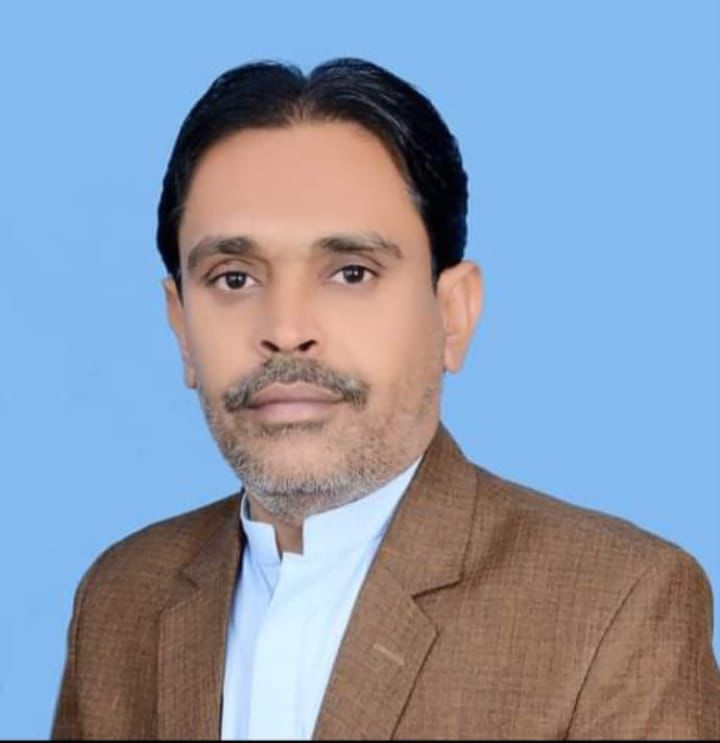
By: Aziz Lashari
Balochistan’s education system is trapped in a crisis that is hard to capture in words. Out of the province’s 15,096 schools, around 3,694 are completely non-functional. This means nearly one in every four schools is either closed or lacks teachers and basic facilities. As a result, thousands of children are being denied education before even reaching the school gate.
Statistics reveal that around 2.9 million children between the ages of 5 and 16 in Balochistan are out of school—roughly 65% of all school-age children. Among them, 1.7 million are girls and 1.2 million are boys. The rural-urban divide paints an even darker picture: in rural areas, the out-of-school rate rises to 72%, while in urban centers nearly 45% of children are not enrolled. This is the highest rate compared to other provinces of Pakistan, signaling an alarming educational emergency.
The dropout rate makes the situation even worse. Nearly 40% of children who enter primary school drop out before reaching grade five. By the time they reach middle school, 70% quit before matriculation. Only about 15% of students make it through matric. Girls drop out at much higher rates than boys—particularly after middle school, where the dropout rate for girls spikes to 78%.
The reasons are well-known: long distances to schools, lack of transport, poverty, teacher absenteeism, an outdated and irrelevant curriculum, low parental literacy, and—especially for girls—social and cultural barriers. In many rural areas, girls are not allowed to continue beyond middle school because there is no nearby high school, or parents fear for their safety while traveling.
The literacy rate tells the same story of despair. Overall literacy in the province stands at 46%, with male literacy at 61% and female literacy just 29%. In some rural districts, female literacy drops to as low as 10–15%. Even in urban areas, it barely reaches 40%.
These numbers align with my own observations. Over the past 15 years, after closely reviewing schools across Balochistan, I’ve seen that out of every 100 children who enroll in primary school, about 40 drop out before middle school. Of those who make it to middle, 70% leave before matriculation. This is not just an educational failure but negligence toward the future of an entire generation.
The examination system reflects the same backward approach. Student evaluation is still based on rote memorization rather than creativity, critical thinking, or practical skills. As a result, students study only to pass exams—not to learn. Exam results are often delayed by 2 to 4 months, disrupting academic and career planning.
Over the years, NGOs have stepped in with various initiatives: repairing schools, training teachers, and offering scholarships to underprivileged children. Some programs were briefly successful, but because they were never absorbed into government policy, they collapsed once funding dried up.
It is worth noting that the provincial education department is not starved of resources. Balochistan’s annual education budget is Rs. 71 billion—around 17% of the total provincial budget. Yet, the system has not improved to reflect such heavy spending. The real problem is not a lack of resources, but poor planning, weak monitoring, and little transparency.
This raises a crucial question: can children who drop out early become productive and responsible citizens of tomorrow? The reality is bleak. Without education, their economic opportunities shrink. Most end up in low-wage, unskilled jobs—or fall into unemployment altogether. This has ripple effects across society, fueling crime, addiction, and extremism, while limiting civic awareness and democratic participation.
The situation is most dire for girls. In rural Balochistan, when girls are unable to continue education beyond primary or middle school, their lives become confined to domestic responsibilities. Many are married off at a young age, stripped of opportunities to make independent decisions. Most never achieve financial independence or provide better educational environments for their own children—perpetuating deprivation across generations. This is not just an educational tragedy but a social disaster, blocking Balochistan’s path to progress.
If urgent and comprehensive measures are not taken, the literacy rate could drop by another 5–7% in the next decade, with dropout rates surpassing 70%. Such a crisis would have devastating economic, social, and psychological consequences for the province.
What needs to be done is clear: ensure at least one middle or secondary school within every 5 kilometers—especially for girls; modernize the examination system to test creativity and practical skills; guarantee timely and transparent results; make teacher training practical and mandatory for at least 30 hours every year; integrate successful NGO projects into government programs; and provide safe transport, scholarships, and a supportive school environment for girls.
Children in Balochistan are no less intelligent or capable than those in developed countries. The difference lies only in opportunities. With serious planning and real action today, these very children can guarantee a prosperous and developed future for Balochistan tomorrow.