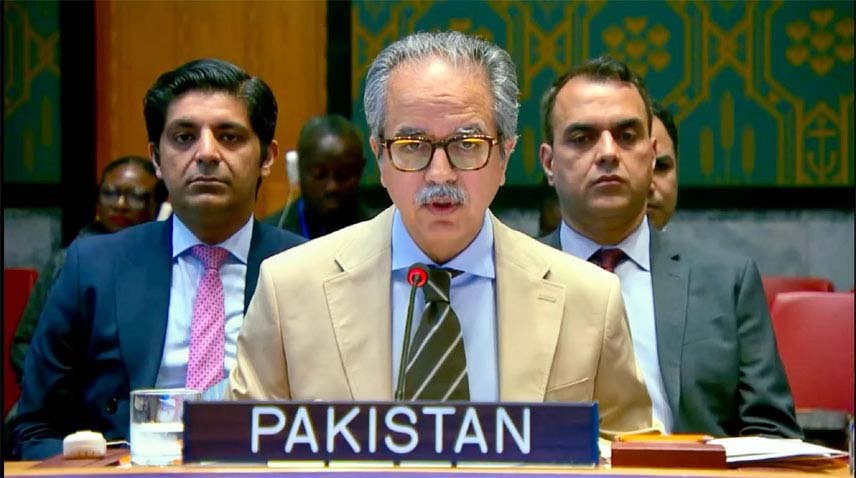
LAHORE: The Centre for Aerospace and Security Studies (CASS) Lahore on Wednesday organised a seminar titled “Pakistan-India Relations: Deterrence, Rivalry, and the Contours of Stability”, bringing together academics, intellectuals, senior officers and experts to discuss the evolving relationship between the two nuclear-armed neighbours.
Senior Research Associate CASS Lahore Ameer Abdullah Khan delivered the opening address.
Former Pakistan high commissioner to India Ambassador Abdul Basit reviewed the trajectory of bilateral relations from the 2004-08 engagement to subsequent crises, including the Mumbai attacks, Uri, Pulwama and the 2025 Pahalgam confrontation.
He attributed India’s current disengagement, in his assessment, to its growing economic confidence and domestic political considerations, and said normalisation would remain difficult without addressing the Kashmir dispute. He called for reciprocal diplomacy and greater strategic clarity.
Ambassador Zamir Akram, adviser to the Strategic Plans Division, discussed what he described as India’s evolving military doctrine and its pursuit of limited conventional options below the nuclear threshold. He also referred to developments concerning dual-capable systems and the Indus Waters Treaty, saying these had implications for regional strategic stability.
Quaid-i-Azam University Associate Professor Dr Salma Malik highlighted the risks of accidental escalation amid strained relations. Referring to a recent naval incident in the Arabian Sea, she said routine incidents could develop into wider crises under the current circumstances.
She also discussed the Kashmir dispute, tensions over the Indus Waters Treaty and weakening crisis-management mechanisms, cautioning that nuclear deterrence could prevent a planned war but not necessarily an accidental one.
CASS Lahore President Air Marshal Asim Suleiman (retd) said Kashmir and the Indus Waters Treaty remained key sources of tension. He called for a coherent national strategy combining political stability, economic and technological strength, conventional and strategic deterrence, diplomacy and responsible crisis management.
The seminar concluded with an interactive session on deterrence modernisation, crisis-management mechanisms and diplomatic and legal options for managing Pakistan-India tensions.